Sensory Economy: What SMEs Can Learn from Squishy's Success
Sensory Economy: What SMEs Can Learn from Squishy's Success

The Most Talked-About Product Wasn't a Smartphone. It Was a Squishy.
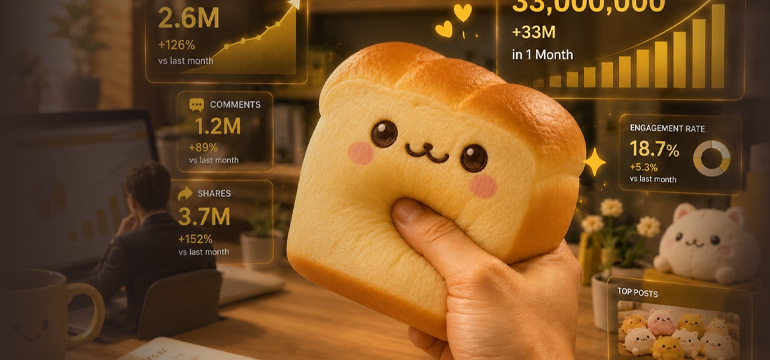
In June 2026, the most discussed product on Thai social media was neither the latest smartphone nor an electric vehicle. It was Squishy — the soft, squeezable toy that generated more than 33.9 million engagements in a single month, according to data from Zocial Eye by Wisesight.
For business owners and marketers, the real story is not the toy itself. It is the feeling that this simple product delivers in a world increasingly dominated by screens and digital interactions.
What we are witnessing is a growing consumer trend known as the Sensory Economy.
Sensory Economy: The Business of Tangible Experiences
Consumer behavior analysts describe today's market as a Sensory Economy, where consumers are willing to pay not only for functionality but also for experiences that stimulate their senses and create emotional connections.
This trend can be seen across industries:
- The resurgence of vinyl records, which have outsold CDs in several markets since 2022
- Renewed interest in film photography
- Growth of independent bookstores
- The popularity of board game cafés
- And most recently, the Squishy phenomenon in Thailand
In an increasingly digital world, consumers are seeking products and experiences they can touch, hear, feel, and remember.
The Squishy Craze: A Sign of Thailand's Sensory Economy
According to Social Listening data from Wisesight between 1-24 June 2026, the Squishy trend generated over 24,937 social media mentions.
TikTok accounted for 85.8% of all conversations, with discussions increasing from only a few hundred posts per day to more than 2,500 posts daily. This suggests the phenomenon is more than a short-lived viral trend.
Perhaps even more interesting is the performance of ASMR-style content, featuring squeezing sounds and tactile demonstrations. These videos consistently generated significantly higher engagement than conventional product content.
The insight is clear: consumers are responding to the experience, not merely the product.
The trend also expanded beyond digital platforms. Terms such as "Sampeng" and "where to buy" appeared frequently in conversations, showing that consumers were willing to leave their screens, visit physical stores, interact with products firsthand, and then share their experiences online.
Four Sensory Touchpoints SMEs Can Implement Today
The good news for SMEs is that creating sensory experiences does not require reinventing products or investing heavily in technology.
Often, small improvements at key customer touchpoints can make a significant difference.
1. Packaging: The First Physical Impression
Before customers experience the product itself, they experience the packaging.
The weight, texture, and overall quality of packaging immediately influence perceptions of value and professionalism.
Consider:
- Using textured paper instead of lightweight alternatives
- Replacing low-cost plastic packaging with cotton, linen, or recycled paper materials
- Creating packaging that feels premium and intentional
For B2B Businesses
Packaging principles apply beyond retail products.
A proposal printed on premium 250 gsm paper and presented in a high-quality binder can create a stronger impression in a boardroom than a standard document.
Similarly, embossed or letterpress business cards can communicate professionalism before a conversation even begins.
2. The Unboxing Experience: A Shareable Moment
Opening a package is often one of the most memorable moments in a customer's journey.
Businesses can enhance this experience through simple touches such as:
- Handwritten notes addressed to customers
- Unexpected product samples
- Branded stickers
- Small complimentary gifts
These details create "wow moments" that customers naturally want to share.
For B2B Businesses
Consider creating:
- Welcome kits for new corporate clients
- Sample kits delivered before key meetings
- Premium onboarding experiences for strategic customers
These gestures can help businesses stand out from competitors who communicate solely through email attachments and PDFs.
3. Physical Space: Designing Through Light, Sound, and Scent
For businesses with physical locations, the environment itself becomes a powerful sensory tool.
Small adjustments can significantly improve customer perception:
- Warm lighting instead of harsh white lighting
- Signature scents using diffusers
- Curated playlists that match the brand personality
- Comfortable and thoughtfully designed spaces
For B2B Businesses
Client visits represent valuable sensory touchpoints.
A meeting room with natural light, the aroma of freshly brewed coffee, and a calm atmosphere can immediately communicate attention to detail and professionalism.
Sometimes, clients form stronger impressions from the environment than the presentation itself.
4. In-Product Sensation: How Your Product Feels
Every product or service creates a sensory experience.
The question is whether that experience is intentionally designed.
Examples include:
- Restaurants offering contrasting textures within a single dish
- Service businesses providing signature hospitality rituals
- Digital products incorporating thoughtful sounds, animations, and haptic feedback
For B2B Businesses
Sensory experiences extend beyond physical products.
A beautifully designed dashboard, an easy-to-read client report, responsive service delivery, and proactive communication all contribute to how customers "feel" about working with your business.
These feelings often influence renewal decisions as much as performance metrics.
The Key Takeaways for SME Owners
Start with One Touchpoint
You do not need to transform every customer experience at once.
Identify one customer touchpoint that can be improved this week and observe how customers respond.
Sensory Does Not Mean Expensive
Creating meaningful experiences is less about budget and more about intention.
A better-quality material, a handwritten note, or a carefully curated playlist may cost very little but can create lasting impressions.
The Question Every Business Should Ask
If Squishy can generate more than 33 million engagements in a single month, perhaps consumers are not responding to the toy itself.
Perhaps they are responding to the feeling it provides.
For business owners, the more important question is:
What feeling does your brand create that customers can genuinely experience?
#KrungsriBusinessEmpowerment #KrungsriSME
#SensoryEconomy #DigitalFatigue #SquishyFever #SMEไทย #ConsumerInsight
 +66 2 626 2626
  08:30-17:30 | Mon-Fri
 krungsribusinesslink@krungsri.com
  Krungsri Business Empowerment


Share